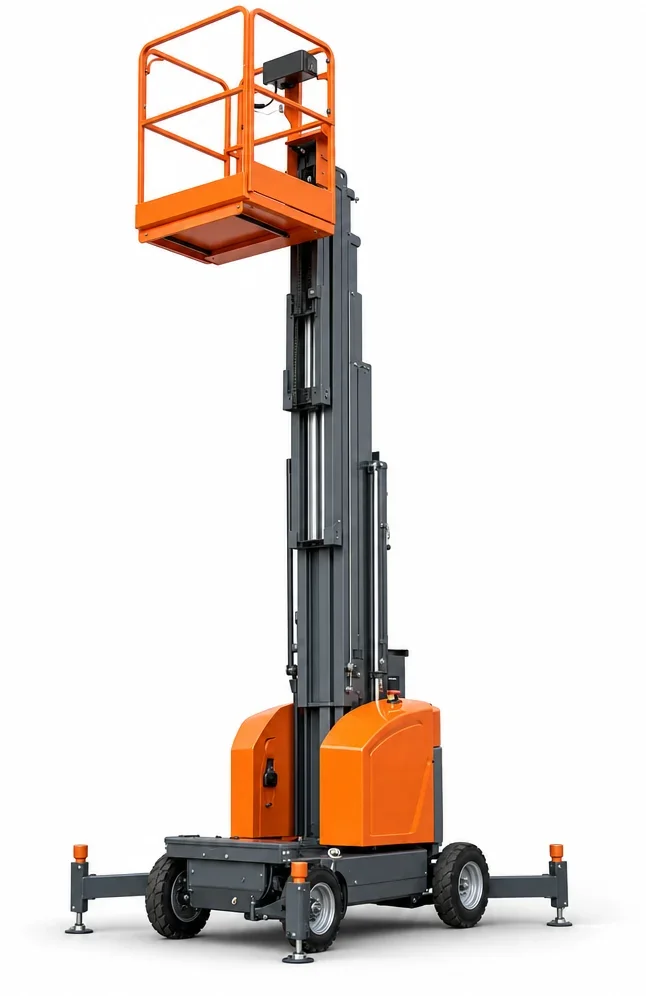
When a mast lift makes sense
- Overhead maintenance on lighting, sensors, and cable trays located near aisles.
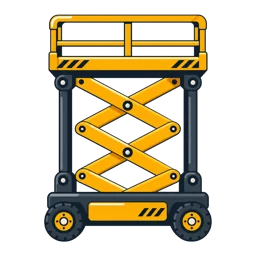
- Tight production zones where a scissor lift is too wide.
- Tasks that favor low machine weight and small point loads on sensitive floors.
If wider platforms or multiple workers need room to stage tools, review /electric-scissor-lift-rental/ instead.
Local conditions and constraints
- Interior sanitation standards in production buildings push toward electric models with containment options and clean tires.
- Winter cold is less of a factor indoors, but exterior transfers in freezing weather may still affect battery performance between buildings.
- Soft or uneven outdoor surfaces around industrial sites are not suited to most mast lifts; keep routes on smooth slabs and level aprons.
Measurements to confirm
- Door and aisle width versus machine width, plus turning radius for interior corners.
- Stowed height compared to low overheads, then platform height against the target work elevation.
- Floor rating and mezzanine capacity where low machine weight is an advantage.
Related categories
- For obstacle clearance or offset access, see /articulating-boom-lift-rental/.
- For outdoor platforms on unfinished ground, see /rough-terrain-scissor-lift-rental/.
- For a broader aerial overview, visit /aerial-lift-rental/.
Decision recap
Vertical mast lifts excel when access is tight and the work sits nearly overhead. In Cedar Rapids, interior hygiene needs and slab-only routes shape the selection. Actual conditions, the selected unit’s instructions, and site procedures govern elevated work.