Fit the machine to the interior
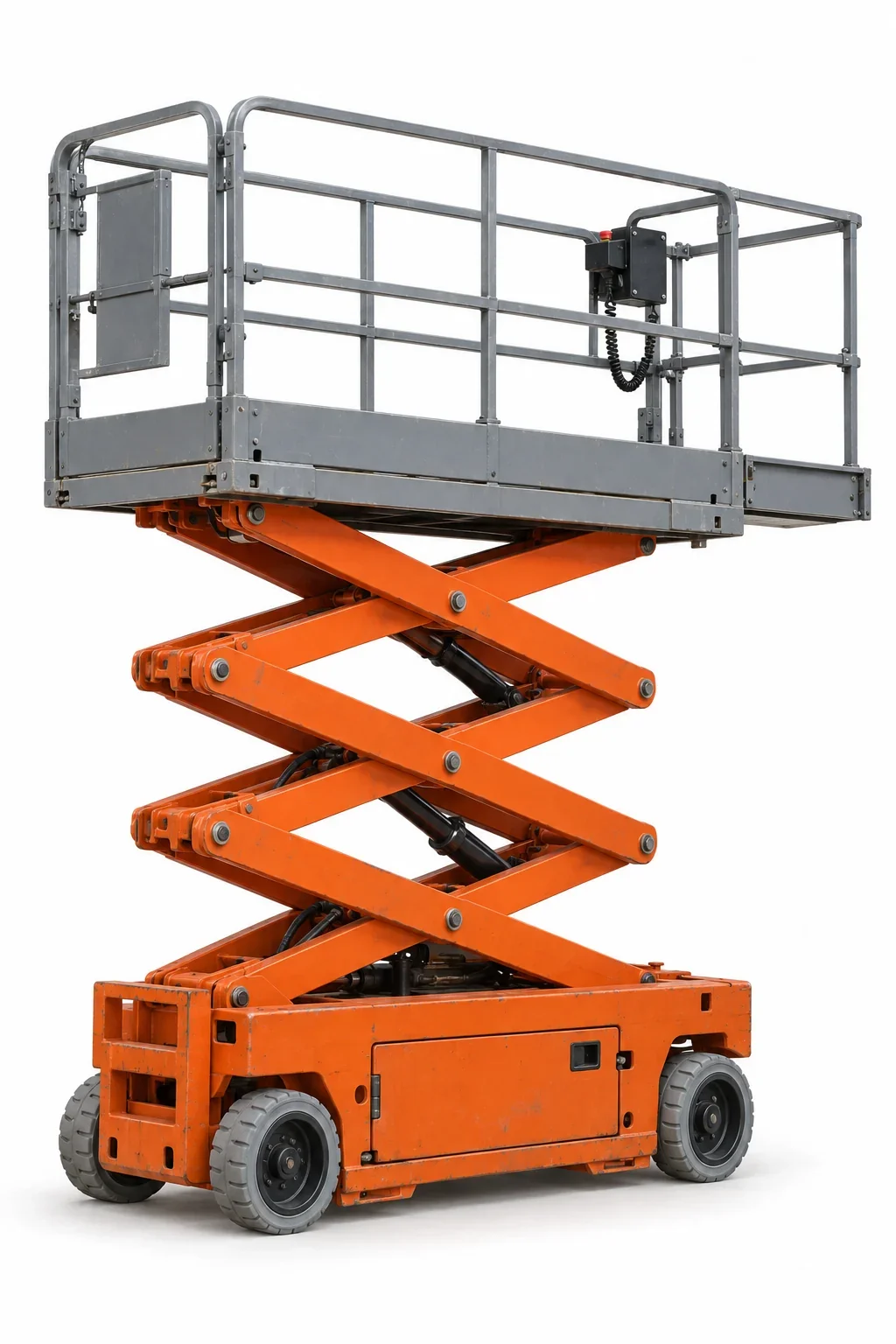
Start with access: measure the narrowest doorway and aisle, note turning space, and check floor load limits near drains and trenches. Many Cedar Rapids interiors combine smooth floors with equipment clusters that restrict swing. Electric slab scissors maintain a small footprint and predictable point loading for these paths.
Why local industries point to electric
Indoor maintenance in cleaning‑sensitive environments benefits from non‑marking tires and electric drive that avoids fumes. Routine tasks include lighting, conveyor sensors, and sanitary ceiling work where consistent platform positioning matters more than speed. For mezzanines and production corridors, a low stowed height helps pass under overhead utilities before elevation.
Key selection constraints
- Working height and platform capacity for parts bins, fixtures, or small tools
- Machine width versus aisle and rack spacing
- Stowed height for doorways and interior clearances
- Non‑marking tires and low‑emission operation to align with hygiene protocols
If the lift cannot sit directly beneath the task because of conveyors or tanks, consider an articulating boom’s up‑and‑over reach at /boom-lift-rental/ or compare categories at /aerial-lift-rental/.
When electric isn’t enough
For exterior doors that open to gravel lots or winter snow, an electric slab unit may lose traction or ground clearance. In those cases, move to rough‑terrain scissors at /rough-terrain-scissor-lift-rental/ and evaluate tire tread and gradeability suited to unfinished surfaces.
Actual conditions, the selected unit’s instructions, and site procedures govern safe setup and operation.