Match the load to the chart
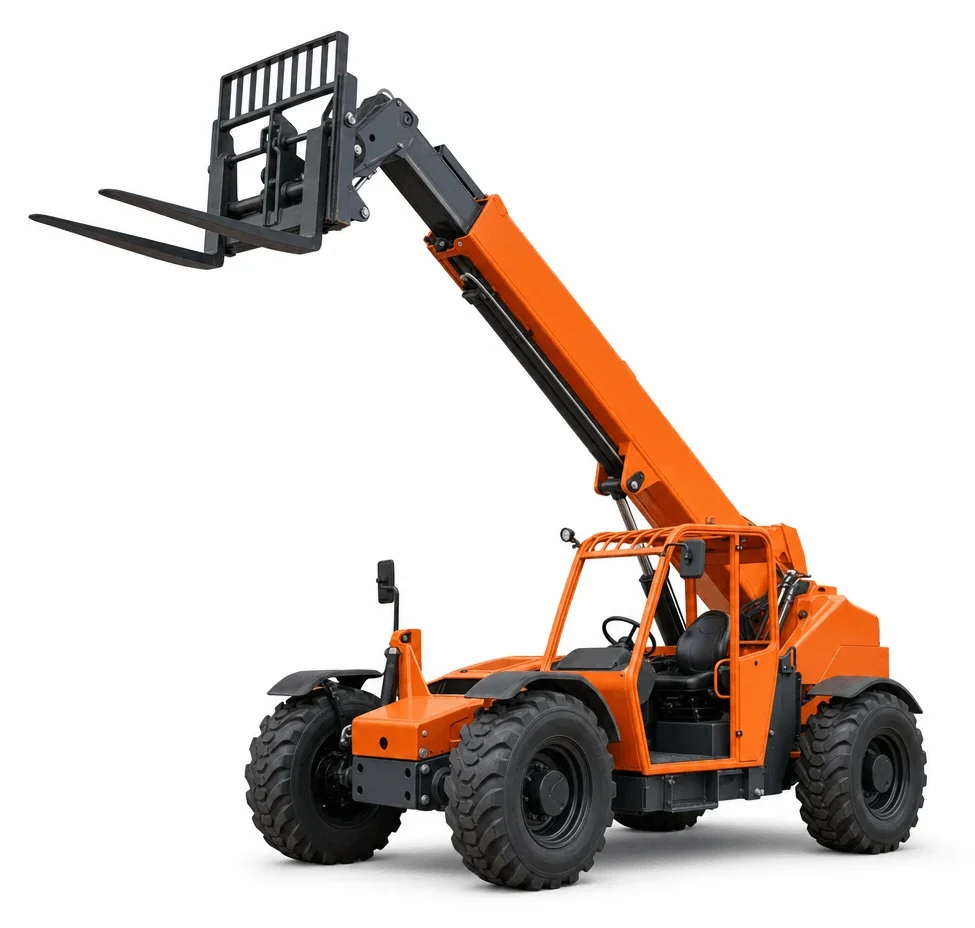
Start with the actual load weight, the placement height, and how far the load must extend beyond the front tires. Telehandler capacity drops as the boom extends and rises. Knowing the load center and fork position helps determine whether the placement stays within the chart.
Typical local uses include: - Setting mechanical units on mezzanines or platforms at industrial sites. - Delivering skids along long runs of exterior work where a crane isn’t practical. - Feeding materials to installation crews at large infrastructure builds.
Cedar Rapids jobsite factors
- Winter temperatures influence hydraulic performance and starting reliability. Machines configured for cold conditions support consistent lift functions.
- Humidity and river-adjacent soils can leave access lanes soft. Rough-terrain capability and adequate tires help in these areas, and stable staging pads reduce rutting risk.
- Tight logistics at active facilities mean turning radius, overall height, and fork carriage type matter for interior yards and docks.
Dimensions and attachments that affect planning
- Overall height and width determine gate and door access.
- Turning radius and wheelbase dictate maneuvering in laydown yards.
- Fork carriage type and side-shift capability affect precise placement into racks or onto decks.
- Rated lift height and forward reach must cover the bay depth or parapet setback.
Related categories
- For elevated work access instead of load placement, see /telescopic-boom-lift-rental/ or /articulating-boom-lift-rental/.
- For interior pallet movement on finished floors, see /forklift-rental/.
Decision recap
Select a telehandler when moving and placing materials where ground is uneven or set-backs are long. In Cedar Rapids, plan around winter cold, summer moisture that softens ground, and yard logistics that affect turning and clearance. Actual conditions and the selected unit’s instructions govern lift and placement limits.