Establish the load and duty cycle
Start with the equipment and lighting that must stay on through turnovers, sanitation windows, and night pours. Continuous loads (IT buildout, heaters, pumps) point toward larger diesel generators with room for surge; intermittent tools may allow a smaller unit if the peak draw is mapped carefully. In Cedar Rapids winters, cold affects starting and runtime, so reserve headroom for heaters and warming devices tied to the work plan.
- Map starting amps for compressors, welders, and pumps.
- Note whether lights and power share a source or run separately.
- Set expected runtime between refuels to clear overnight windows.
Place equipment around traffic and ground conditions
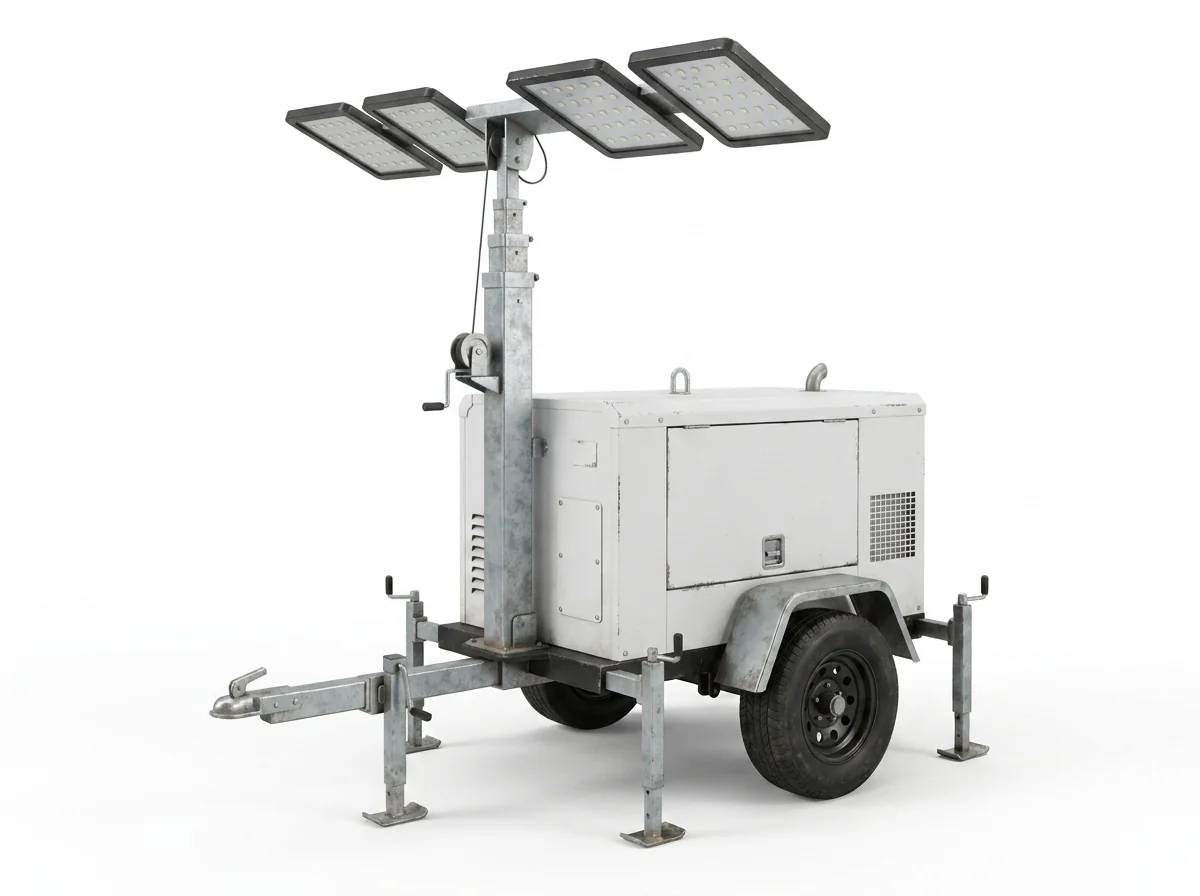
Industrial sites on the edge of town can have saturated subgrade after summer storms or spring thaws. Light towers and towable generators need firm placement that doesn’t collapse under outriggers or trailer jacks. Keep units outside main forklift aisles and staging lanes used for panel, racking, or pallet flow.
- Confirm the access route width and turning space for delivery.
- Identify a level pad; soft shoulders increase settling risk.
- Plan cable routes that avoid door thresholds and active bays.
Choose tower type for task geometry
Work faces change from wide laydown yards to narrow corridors along building lines. Match tower specification to the beam pattern and clearance.
- For broad outdoor staging areas, consider towers with higher mast height and wide flood coverage.
- Along narrow facades or where spill light must be controlled, a directional LED array with tighter aiming reduces glare into occupied work zones.
- When power is already planned for indoor lifts or tools, plug-in LED carts can make sense for short-term interiors; otherwise, keep combustion sources outdoors and route cabling as permitted by site procedures.
Weather and compliance considerations
The regional climate drives enclosure and cold-weather packages for generators, plus attention to wind ratings and tie-down points for towers. Actual conditions, the selected unit’s instructions, and site procedures govern placement and operation. For winter work, budget space for fuel access and snow clearing so refueling does not block critical paths.
Related access planning
If lighting supports elevated tasks, pair the layout with lift selection:
- Tight indoor maintenance: see /electric-scissor-lift-rental/
- Uneven outdoor installation: see /rough-terrain-scissor-lift-rental/
- Mixed-height tasks: see /boom-lift-rental/
What to confirm before you call
- Total kW needed, peak vs. continuous
- Expected runtime between fuel visits
- Ground bearing and pad location for each unit
- Cable routes, door clearances, and barricade needs
- Any light spill restrictions near neighboring properties