Define the perimeter by function
Different edges do different jobs. A public-facing boundary may need taller panels and anti-climb features, while interior barricades direct pedestrian flow near active lift lanes. On projects with mission-critical work, separate clean corridors from material handling with dedicated gates.
- Identify which edges control public access vs. internal routing.
- Size gates for the widest delivery and the tallest mast that will pass through.
- Plan staging pockets so panels don’t block emergency egress.
Ground and weather planning
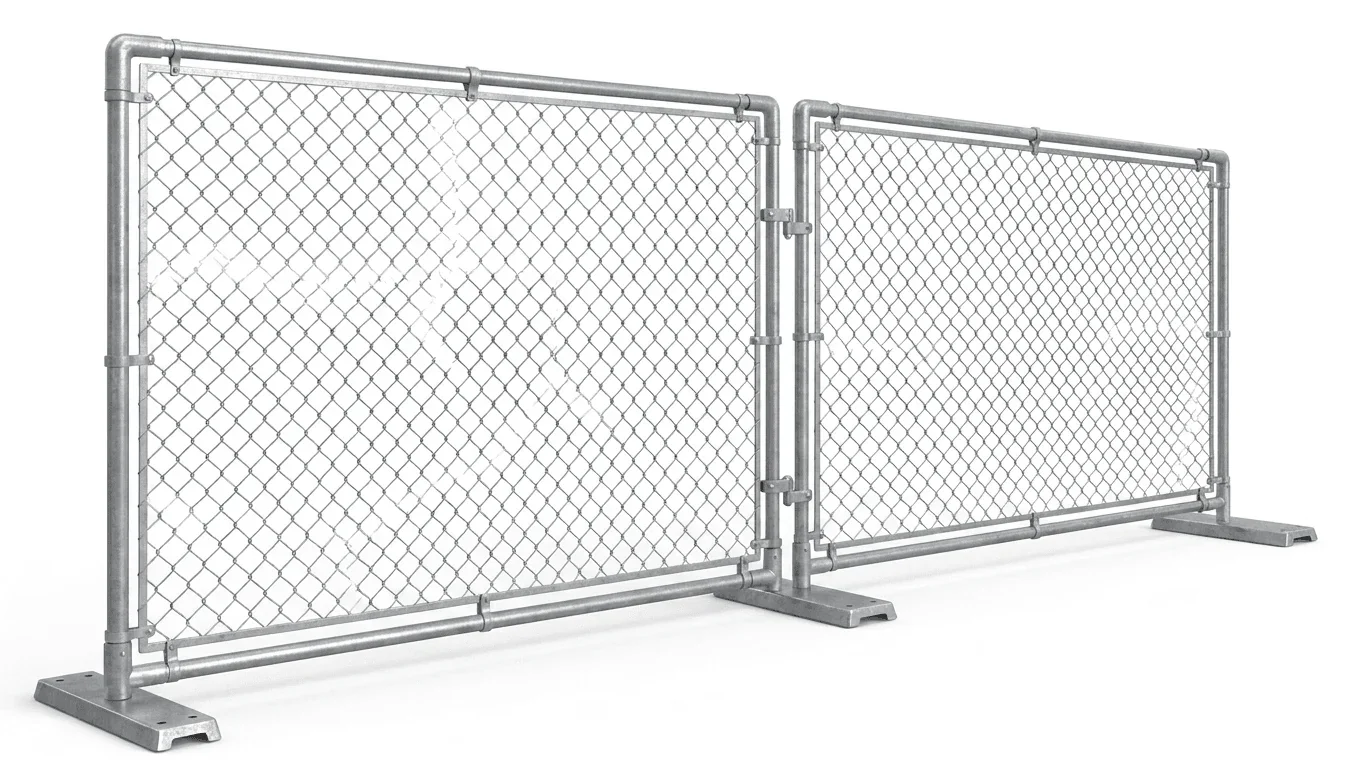
The regional climate brings gusty fronts, snow loads, and saturated soils. Panel stability changes with ground firmness; site-stability factors or driven posts may be needed depending on the surface and exposure. Actual conditions, the selected system’s instructions, and site procedures govern anchor methods and spacing.
- On paved yards, weighted bases help keep panels upright without penetrating surfaces.
- On soils near the river or freshly graded pads, consider solutions that account for soft spots and drainage paths.
- In winter, allow snow storage zones so drifting doesn’t push barricades into traffic.
Coordinate with equipment paths
Fencing should frame the movement of /forklift-rental/, /telehandler-rental/, and aerial units from /aerial-lift-rental/. Gate width, swing, and hinge placement affect whether scissor lifts or /articulating-boom-lift-rental/ machines can pass without removing panels.
- Mark overhead hazards at gates where masts or rails might contact edges.
- Keep barricades offset from slab edges and excavation lines to prevent undermining.
Signage and visibility
Night work at data and processing sites demands clear, reflective markings. If towers from /generators-light-towers-rental/ are planned, locate barricades to avoid creating glare pockets or shadows across pedestrian routes.
What to confirm before you call
- Total perimeter length and number of gates
- Surface type: asphalt, concrete, gravel, or soil
- Exposure to wind and nearby obstructions
- Equipment widths and turning space at each gate
- Duration and any phasing changes to the layout